



















How Jean-Jacques Ndala Saved Senegal’s AFCON Crown
In a unanimous decision, the Court of Arbitration for Sport (CAS) overturned the Confederation of African Football (CAF) Appeal Board’s March 17, 2026 ruling and officially restored Senegal as the champions of the 2025 Africa Cup of Nations (AFCON).
In November 1979, during a Peruvian regional cup tie between Sport Boys and Deportivo Junín, a referee named César Pagano found himself surrounded by furious players after awarding a late penalty. Rather than blowing his whistle to abandon the fixture or reaching for his red card, Pagano quietly pocketed his notebook, jogged toward the stadium tunnel, hailed a passing taxi outside the gate, and went home for dinner. Because he never formally terminated the match before vanishing into Lima traffic, the league’s disciplinary committee spent three weeks debating whether the game was legally suspended, abandoned, or still technically in progress.
Football has always struggled with the collision between what happens on the grass and what lawyers decide months later. On November 24, 2026, that exact collision reached its climax in Lausanne, Switzerland. In a unanimous decision, the Court of Arbitration for Sport (CAS) overturned the Confederation of African Football (CAF) Appeal Board’s March 17, 2026 ruling and officially restored Senegal as the champions of the 2025 Africa Cup of Nations (AFCON).
For ten months, African football lived in a bizarre split-screen reality where Senegal had lifted the trophy in Rabat and paraded it before supporters in Paris, while CAF’s official records listed hosts Morocco as 3–0 winners by forfeit. The CAS award did not merely hand a gold medal back to Dakar; it drew a hard legal boundary around the authority of a match referee and the limits of sports administrators.
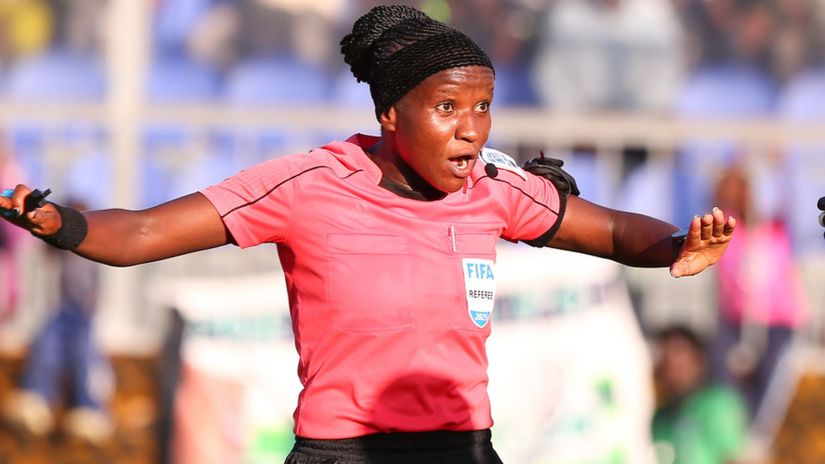
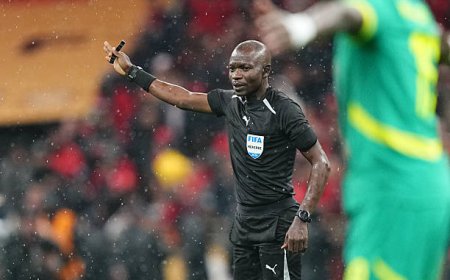
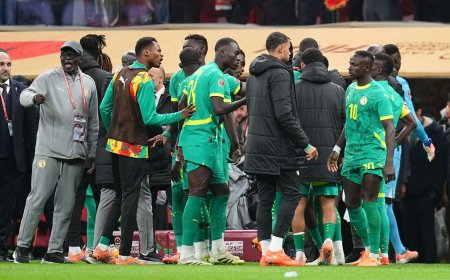
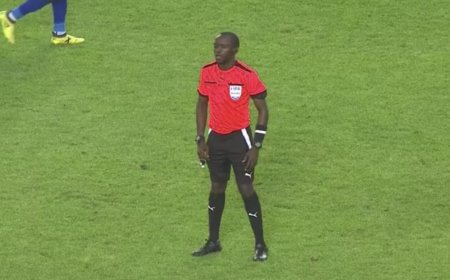
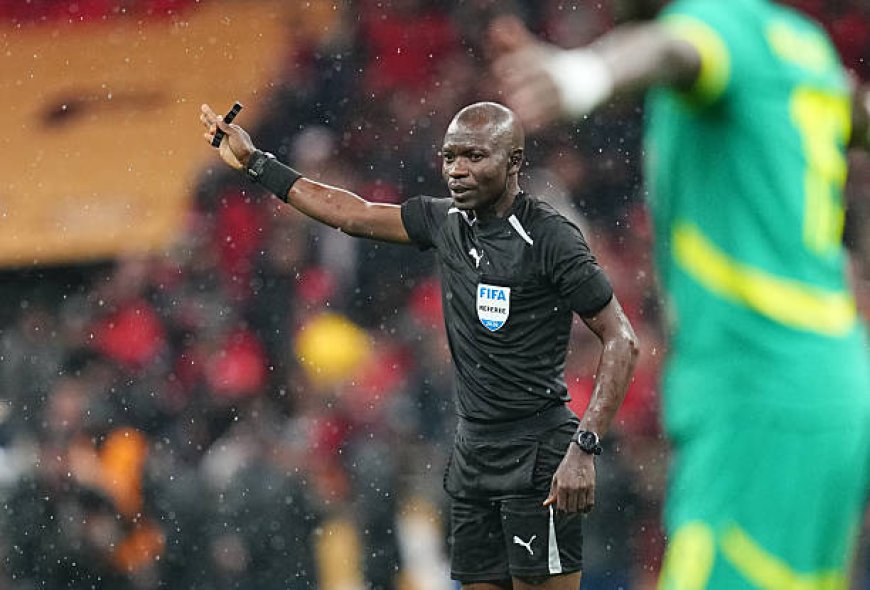
To understand why three European arbitrators dismantled CAF’s verdict, one has to trace the sequence of events from the chaotic night of January 18, 2026, at the Prince Moulay Abdellah Stadium in Rabat. In second-half stoppage time, referee Jean-Jacques Ndala disallowed an Ismaila Sarr goal for Senegal and awarded Morocco a penalty after a VAR review, prompting Senegal’s players to walk off the pitch for roughly 15 to 20 minutes before returning. Brahim Díaz subsequently missed the penalty, and Pape Gueye scored in extra time to secure a 1–0 Senegal victory.
In the immediate aftermath, the CAF Disciplinary Board rejected Morocco’s demand for a match forfeit, confirmed the 1–0 sporting result, and handed down over $1 million in fines and suspensions to both federations, several players, and Senegal head coach Pape Thiaw. However, on March 17, 2026, the CAF Appeal Board reversed that ruling, deciding that Senegal’s temporary walk-off triggered an automatic forfeit under Articles 82 and 84 of the AFCON Regulations and awarding Morocco a 3–0 victory and the trophy. Eight days later, on March 25, the Senegalese Football Federation filed an urgent appeal at CAS against CAF and the Royal Moroccan Football Federation, leading to a closed-door hearing on October 8 in Lausanne before a three-member panel comprising Gerald Simon of France, Luigi Fumagalli of Italy, and Ulrich Haas of Germany, culminating in the final award on November 24.
The heart of the dispute pitted two foundational pillars of football governance against each other. On one side stood Morocco and the CAF Appeal Board, pointing to the strict text of the AFCON competition regulations, while on the other stood Senegal, relying on the universal laws of the game governing what happens between the first whistle and the last.
The CAS panel resolved that conflict first by affirming that Congolese referee Jean-Jacques Ndala possessed the sole, non-delegable authority on the night of January 18 to decide whether the match had broken down beyond repair or could safely continue. Once Sadio Mané and the Senegalese technical staff brought the players back onto the grass and both teams lined up for the penalty kick, the conditions for resuming the contest were met, and by ordering play to restart, Ndala legally kept the match alive.
Building on that authority, CAS applied the field of play doctrine under Law 5.2 of the IFAB Laws of the Game and Article 9 of the FIFA Disciplinary Code, which establish that decisions taken by a referee regarding facts connected with play—including whether to suspend or resume a game—are final. Because Ndala’s decision to restart the final had effects confined directly to the pitch, sports tribunals could not act as a second referee months after the stadium lights had been turned off.
Morocco’s legal team had argued that Ndala’s decision to resume play was legally defective because the 15-to-20-minute stoppage, fan clashes with security, and intense pressure from Senegal’s walk-off had compromised his free judgment. CAS examined the match reports and video evidence and rejected this claim outright, acknowledging that while the referee operated in an atmosphere of extreme tension, there was no proof that his decision to continue was arbitrary or dictated by improper external coercion.
Furthermore, the panel dismantled the CAF Appeal Board’s reliance on Articles 82 and 84 of the AFCON tournament regulations, which state that if a team refuses to play or leaves the ground before the regular end of the match without the referee's authorization, it shall be considered the loser and eliminated. CAS ruled that Articles 82 and 84 are remedial abandonment provisions designed to give administrators a scoreline only when a team’s walk-off forces the referee to permanently terminate a match. Because Ndala never abandoned the game and instead oversaw the penalty kick, 30 minutes of extra time, and the final whistle, the forfeiture clause was never triggered.
Under Article R57 of the CAS Code, a panel enjoys full power to review both the factual record and the legal arguments fresh from the beginning, yet in football disputes, CAS exercises self-restraint by separating sporting facts from legal interpretation. On the questions of fact, the panel established that Senegal did not permanently refuse to play because they returned before the referee terminated the fixture, that the match was officially completed through extra time and the final whistle, and that tension inside a 66,000-capacity stadium did not amount to fraud, corruption, or external duress tainting the referee's judgment. Under the field of play doctrine, whether a stoppage had been resolved enough to restart a game remained a pure question of on-pitch fact reserved exclusively for the referee.
On the questions of law, CAS ruled that neither Law 5 of the IFAB Laws of the Game nor CAF regulations impose an automatic legal duty on a referee to abandon a match the moment players step across the touchline, meaning Ndala acted well within his legal discretion. As a matter of statutory construction, Articles 82 and 84 could not apply retroactively to erase a legitimate on-pitch scoreline once a match was lawfully completed. Most importantly, CAS affirmed a sharp legal boundary between disciplinary jurisdiction and sporting outcomes, confirming that while CAF had full legal authority to punish Senegal’s walk-off through fines and suspensions for misconduct and delaying the restart, it could not weaponize a forfeiture clause to alter the outcome of a finished game.
Beyond the headline verdict, several critical legal realities sit beneath the surface of this dispute that are frequently overlooked. First, CAS did not excuse Senegal’s walk-off; it only overturned the 3–0 forfeiture, leaving intact the more than $1 million in combined fines and the suspensions handed down by the CAF Disciplinary Board for misconduct and stadium disorder. Second, the ruling serves as a blunt reminder to continental confederations that appellate committees cannot override a match official's judgment simply to protect the image of a competition, as IFAB Laws of the Game and FIFA disciplinary principles outrank a regional tournament handbook.
Critics have also questioned whether this verdict creates a dangerous loophole allowing teams to stage tactical walk-offs to cool down an opponent's momentum during a decisive penalty kick. In practice, that gamble remains suicidal, because had referee Jean-Jacques Ndala decided that Senegal had abandoned the match or issued a strict ultimatum before blowing the whistle to terminate the game, Articles 82 and 84 would have applied immediately and CAS would have upheld the 3–0 forfeit. Senegal survived legally only because the referee chose patience over termination.
Finally, because CAS is seated in Lausanne, its awards are governed by Swiss arbitration law, leaving Morocco with almost no room to fight back. Under Article 190(2) of the Swiss Private International Law Act, Morocco can file an annulment appeal before the Swiss Federal Supreme Court within 30 days, but the court will not re-examine whether Articles 82 and 84 were interpreted properly or whether the referee made the right call. It can only overturn a CAS award on five narrow procedural grounds: improper constitution of the arbitral panel, wrongful acceptance or denial of jurisdiction, ruling beyond or failing to decide the claims requested, violating the parties' right to be heard or equal treatment, or incompatibility with Swiss public policy—an extraordinarily high threshold rarely met in sports disputes.
What's Your Reaction?
 Like
0
 Dislike
0
 Love
0
 Funny
0
 Angry
0
 Sad
0
 Wow
0